Why it matters here
Why does roofing in Berthoud cover so much ground?
Because the properties are so varied. A single Berthoud roofer might rebuild chimney flashing on an older in-town home in the morning and reseal a metal shop roof on acreage in the afternoon.
The town's older blocks have the same issues as any historic core: steep roofs, brick chimneys, past layers of shingles and decking that predates plywood. Newer subdivisions around town look more like the rest of the Front Range suburbs, with first roofs, HOA rules and the risk that one strong hailstorm takes years off a roof that still looks new.
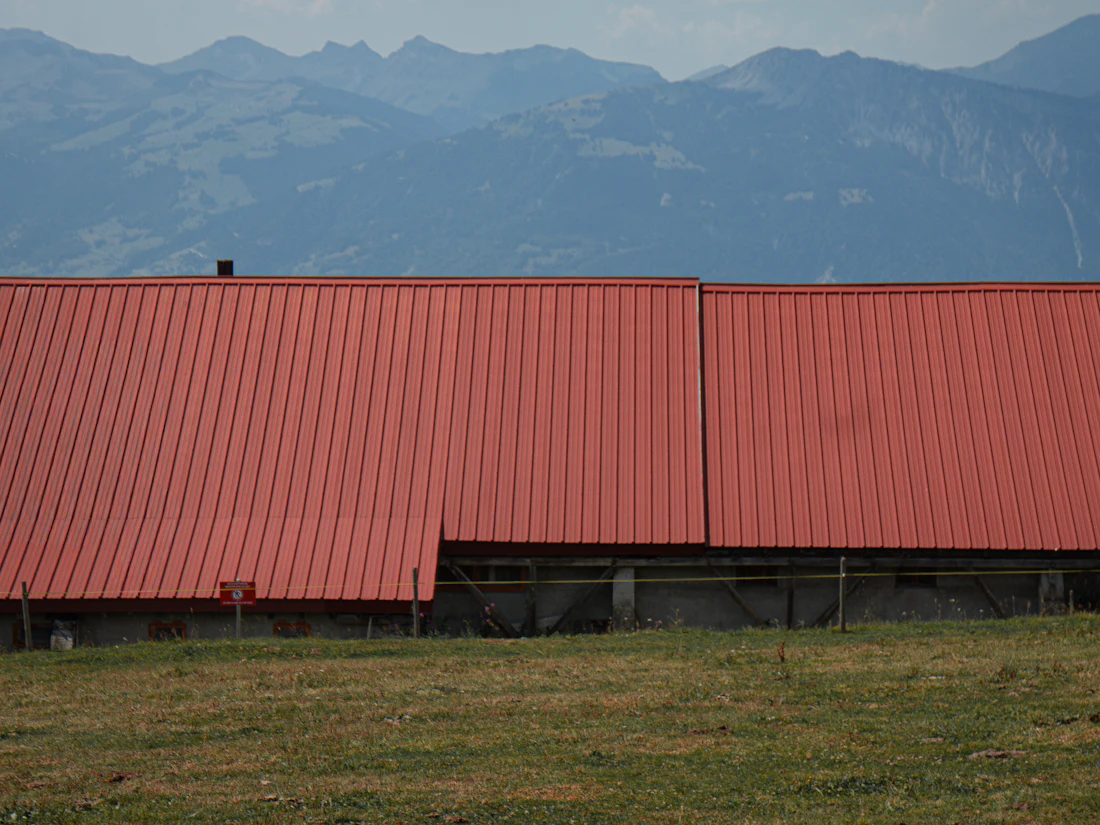
Then there is the rural side. Many properties on the edges of town include barns, horse shelters, detached garages and shops, often roofed in exposed-fastener metal panels. Those roofs have their own failure points. The rubber washers under each screw dry out and crack in strong sun, screws back out as panels expand and contract, and seams at ridges and eaves loosen in wind. Open fields offer little shelter, so wind and wind-driven hail hit these buildings with full force.
Permits work a little differently too. Depending on whether a property sits inside town limits or on unincorporated land, re-roof permits go through the Town of Berthoud or the county rather than the City of Loveland. Inside town limits, the Town requires a permit for roofing work larger than one square (100 square feet), and roofers must be licensed with the Town before they can apply. For a full overview of Northern Colorado roofing conditions, start with our main guide.