Hail damage · Loveland, CO
Hail Damage Roof Repair in Loveland
The storm lasted ten minutes. The damage can take a year to show. Hail bruises shingles without breaking them, so the roof looks fine from the driveway right up until it starts to leak. Get it inspected and documented while the storm date is still fresh.
Definition
What is hail damage roof repair?
Hail damage roof repair is the process of finding, documenting and fixing the impacts a hailstorm leaves on a roof, from bruised shingles and lost granules to dented vents, cracked skylights and split flashing.
It covers more than shingles. A hail inspection also looks at gutters, downspouts, roof vents, chimney caps, satellite mounts, skylight domes and any metal trim, because those soft materials show the size and direction of the hail. Their damage also tends to be listed on an insurance estimate.
The repair itself ranges from replacing a single cracked vent cap to a full re-roof when the impacts are spread across every slope. Because many hail repairs are paid partly through a homeowner's insurance claim, documentation is as important as the craftsmanship. If you want the broader picture first, our guide to Northern Colorado roofing explains how the region's weather wears roofs down.
Methods
How is hail damage assessed and repaired?
A good hail assessment answers three questions: did hail hit this roof, did it cause functional damage, and how widespread is it? Roofers and adjusters use a fairly standard set of tools to get there.
Collateral check
The inspection starts on the ground with soft metals and painted surfaces. Dents on gutters, downspouts and the fins of the AC condenser, plus spatter marks on fences and decks, confirm that hail fell and roughly how large it was.
Slope-by-slope test squares
On each slope, the inspector chalks a 10-by-10-foot square and counts hits inside it. On asphalt shingles, a damaging hit usually shows as a dark spot where granules are gone, and it feels soft when pressed, like a bruise on fruit, because the mat underneath has fractured. Slopes facing the storm typically show far more hits than sheltered ones.
Material-specific checks
Wood shakes show fresh splits with sharp, light-colored edges. Concrete and clay tile crack or chip at the corners. Metal roofing dents, and the question becomes whether the dents are cosmetic or have cracked the coating or loosened seams.
The repair scope
Light, scattered damage on one slope may be repaired shingle by shingle. When hits exceed what can be repaired without disturbing sound shingles, the slope is replaced, and when most slopes are affected, the roof is replaced. Vents, caps and flashing that took hits are swapped regardless of the shingle decision.
Warning signs
What are the 8 signs of hail damage on a roof?
Some of these you can see from the yard. Others only show up on the roof or in the attic, which is why a professional look matters after any notable storm.
- Round dark spots on shingles where the granule surface has been knocked away.
- Soft, spongy impact points that give under light pressure.
- Granules heaped in gutters or splashed out of downspouts right after the storm.
- Dented roof vents, turbines or chimney caps. Metal on the roof records every hit.
- Cracked or punctured plastic vents and skylight domes. These fail faster than shingles.
- Torn or creased shingle edges, especially when wind drove the hail sideways.
- Dings in gutters, downspouts and window wraps on the side of the house that faced the storm.
- New drips or attic stains weeks or months later, after bruised spots finally crack open.
Causes
Why do some roofs survive hail and others don't?
Two houses on the same block can come out of the same storm with very different results. Several factors decide how much harm a given hailstorm does.
Stone size, density and speed
Larger, harder stones carry far more energy. Hail around an inch across is often cited as the point where standard asphalt shingles begin to fracture, though dense stones can do damage below that size and soft, slushy hail may not do much above it.
Wind direction
Wind-driven hail strikes at an angle and concentrates damage on the slopes facing the storm. That is why one side of a roof can be heavily damaged while the opposite slope is nearly clean.
Shingle age and temperature
Years of sun make asphalt stiffer and more brittle, so an older roof fractures where a newer one would only scuff. Cold shingles are less flexible too, so an early-season storm can do more harm than the same hail in midsummer heat.
Roofing material
Class 4 impact-rated shingles, which pass the UL 2218 steel-ball test, resist hail better than standard products. Heavy-gauge metal tends to dent rather than leak, while brittle tile and older wood shakes break more easily.
Before you call
What can you safely check after a hailstorm?
Wait until the storm has fully passed, then walk the property. Everything on this list can be done from the ground.
- Note the date and time of the storm, and save any photos of hail on the lawn with something for scale, like a coin.
- Look for dents on gutters, downspouts, mailbox, grill lid and the AC condenser fins.
- Check window screens and siding on the storm side for tears, holes or chipped paint.
- Look in the downspout splash zones for loose granules.
- Check your car and your neighbors' roofs for visible damage; hail rarely hits one house alone.
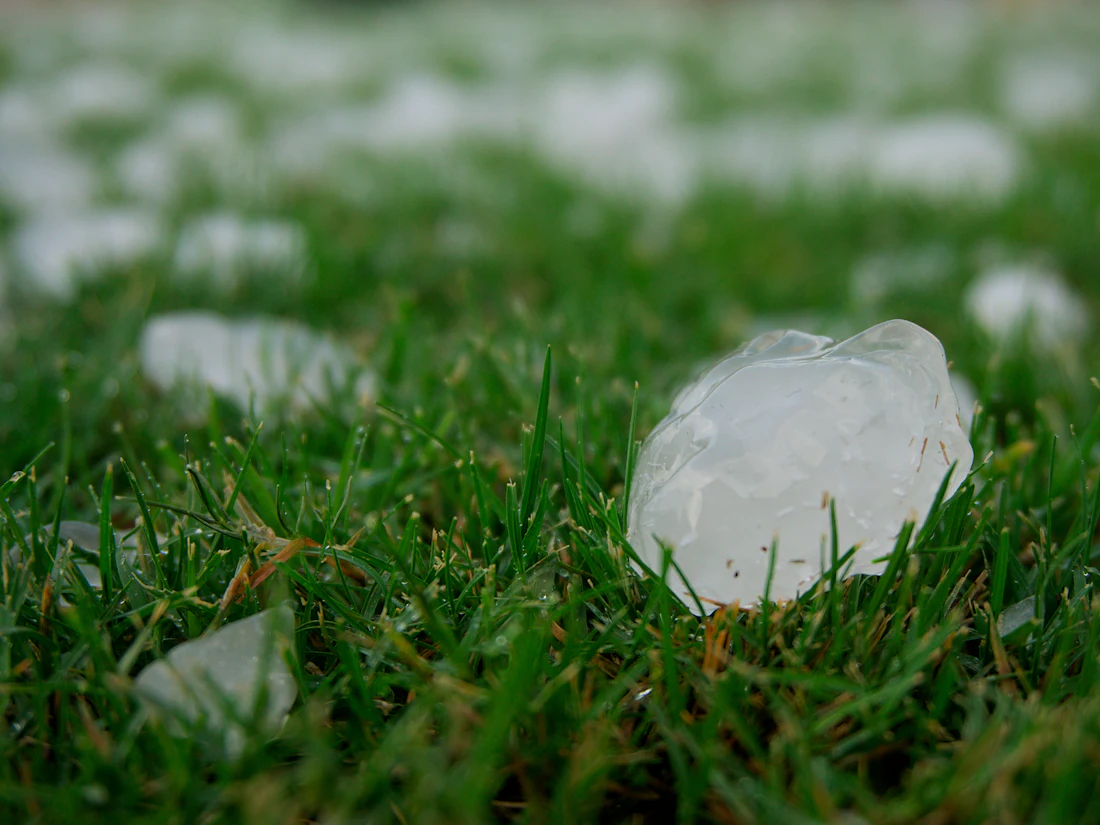
Freeze a few of the larger hailstones in a zip bag right after the storm and photograph them next to a ruler. It is a simple, convincing record of the hail size at your address.
What to expect
How does it go from inspection to claim to rebuild?
Hail jobs follow a longer path than ordinary repairs, because the insurer is usually involved. This is the common sequence.
- Inspection and photos. The roofer documents test squares, collateral damage and every damaged component, with photos you can keep.
- Your decision to file. You review the findings and decide whether the damage justifies a claim against your deductible.
- Adjuster visit. The insurer sends an adjuster. Many homeowners ask their roofer to attend and point out what they found. In Colorado, a roofer with a signed contract can discuss the repair scope with your insurer, but state law bars roofers from acting as public adjusters. Negotiating or settling the claim on your behalf is the job of a licensed public adjuster.
- Scope review. The roofer compares the insurer's estimate with what the roof actually needs and flags missed items, such as vents, drip edge or code-required underlayment, for you to raise with the insurer.
- Contract and scheduling. Colorado requires roofing contracts to include specific disclosures, including your right to cancel within 72 hours after your insurer notifies you in writing that the claim is denied in whole or in part. Read it before signing.
- Build and final paperwork. After the work is done, the final invoice and photos go to the insurer, which on many policies releases any held-back depreciation.
Cost factors
What decides your out-of-pocket cost for hail repairs?
With a claim, your cost depends as much on the policy as on the roof. These are the variables to understand before you file.
| Factor | What it means for you |
|---|---|
| Deductible type | Some policies use a flat amount; others set a percentage of dwelling coverage for wind and hail. |
| RCV vs. ACV | Replacement cost policies typically pay full cost after work is done; actual cash value deducts for age. |
| Extent of damage | Repairing one slope and replacing a full roof are very different claims. |
| Code upgrades | Items required by current code may need ordinance-or-law coverage to be paid. |
| Material upgrade | Choosing impact-rated shingles may cost more upfront but can qualify for premium discounts. |
Urgency
When does hail damage become an emergency?
Most hail damage is a slow problem, but some of it is not. A shattered skylight, a punctured vent letting rain into the attic, or shingles stripped away by wind during the same storm all need temporary protection right away. Call for emergency roof repair to get the opening tarped, then handle the claim once the house is dry.
Be cautious with anyone who knocks the day after a storm and wants a signature on the spot. Take their card, verify the business independently, and do not sign anything you have not read, especially a document that assigns your insurance benefits to them.
FAQ
Hail damage questions from Loveland homeowners
How soon after a hailstorm should I get my roof inspected?
As soon as is practical, ideally within a few weeks. Fresh damage is easier to tie to a specific storm, and your policy has a reporting deadline. Waiting through another storm can also muddy which event caused what.
Will filing a hail claim raise my premium?
Weather claims are often treated differently from liability claims, but rates in hail-prone areas can rise across the board after big storm years. Ask your agent how your insurer handles weather claims before you file.
Can hail damage only one side of my roof?
Yes. Wind-driven hail concentrates on the slopes facing the storm. Insurers sometimes approve replacement of only the damaged slopes, which raises questions about matching. Ask your roofer whether a partial replacement will match the rest of the roof.
Are dents on a metal roof covered?
It depends on the policy. Some policies cover only functional damage that affects watertightness and exclude cosmetic dents. Read the roof section of your policy, or ask your agent, before the adjuster arrives.
What if the adjuster says there is no damage?
You can ask for a re-inspection, provide your roofer's photos and test-square counts, or bring in a licensed public adjuster. Keep everything in writing and note the dates of each conversation.
Should I choose impact-resistant shingles when I replace?
In a hail-prone area it is worth pricing them. They resist bruising better, and some insurers offer a discount for Class 4 roofs. Our page on roof replacement walks through material choices in more depth.
After the storm
Bruised shingles don't leak yet. That's exactly the problem.
(970) 555-0100Call to get connected with a local roofer who can inspect, photograph and document hail damage before you decide on a claim.