Service area · Downtown Loveland

Roofing in Downtown Loveland

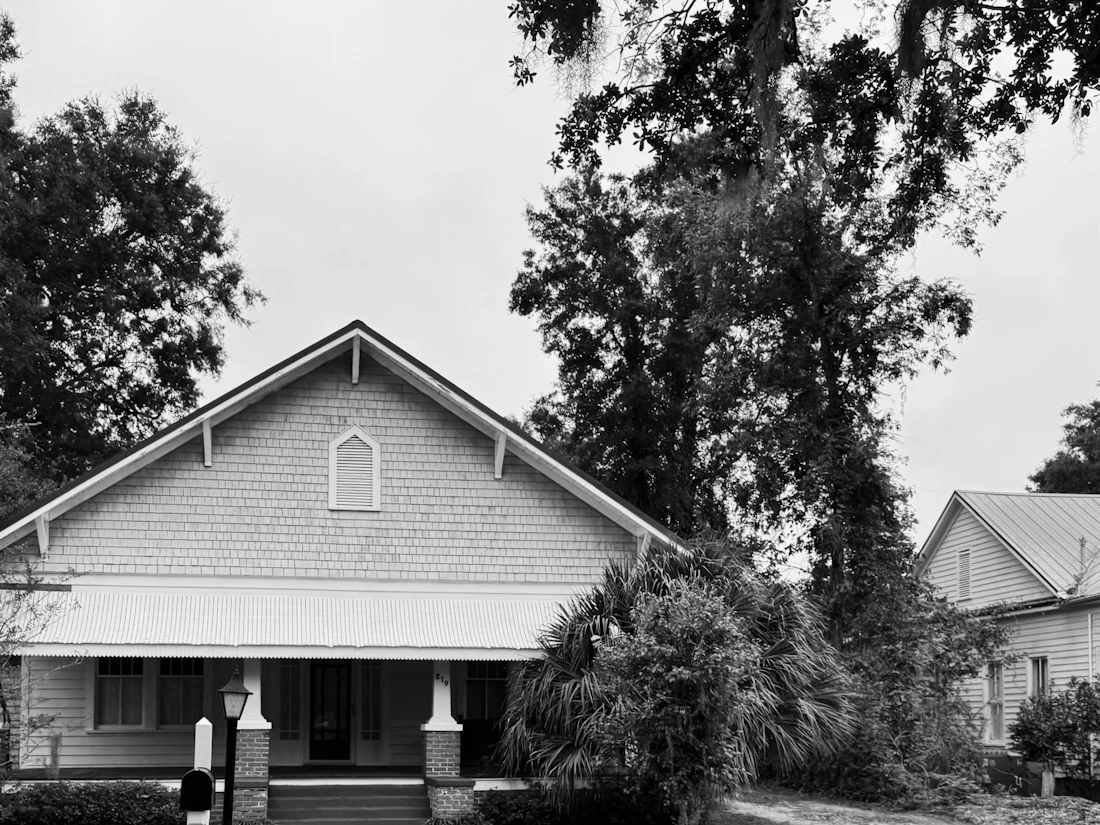
Steep gables, brick chimneys, porches added decades after the house, and sometimes three roofs stacked on top of each other. Older homes near the heart of Loveland need roofers who know what they will find under the shingles.

Older craftsman-style house with a steep gable roof and a front porch, in black and white
Older homes

Why it matters here

Why do downtown Loveland roofs need a different approach?

Because the house underneath is different. Downtown has the city's oldest housing, and roofs on these homes hide problems that newer construction simply doesn't have.

Many older homes were built with board sheathing, rows of individual planks with gaps between them, rather than modern plywood. Some shingle manufacturers require a solid deck for their warranty, so a re-roof may include new sheathing over or in place of the boards. Roofers also commonly find two or even three layers of old shingles, each one adding weight and hiding the condition of the wood.

Then there are the details. Brick chimneys with aging mortar, porch roofs and rear additions tied into the main roof at awkward angles, low-slope sections over sunrooms, and small attics with little ventilation all create leak points. Mature street trees drop leaves into gutters and, in a heavy spring snow, limbs onto roofs. Through all of it, the same Front Range hail, sun and freeze-thaw that affect every Loveland roofing help request apply here too, on roofs that are often already near the end of their life.

Winter adds its own twist. Older homes tend to have thin attic insulation and little air sealing, so heat escapes through the ceiling and melts snow on the roof from below. On a steep gable that meltwater races down to cold eaves and freezes, and the ice dams that follow are a familiar sight on older blocks after a snowy week. A re-roof is the right time to add ice and water shield at the eaves, but the lasting cure usually includes insulation and ventilation work in the attic as well.
What roofers often find downtown

  • Multiple shingle layers hiding worn or uneven decking.

  • Plank sheathing instead of plywood under the roof.

  • Brick chimneys with tired mortar and patched flashing.

  • Mature trees overhanging roofs and filling gutters.

Top services

Which roofing services do downtown homeowners need most?

These four come up again and again on older homes in the city's core, each for a reason tied to how these houses were built.

Chimney and flashing repair

Brick chimneys move and weather differently from the roof around them. Counterflashing set into mortar joints loosens as mortar ages, and wide chimneys without a cricket behind them trap water and debris. Most downtown leak calls trace back here, and a targeted roof repair that rebuilds the flashing usually solves it.

Full tear-off replacement

When an older roof has two or more layers, adding another is rarely allowed and never wise. A full tear-off exposes the deck so plank gaps, rot and sagging can be fixed before new underlayment goes on. It is the moment to bring an old roof up to modern standards in one job, rather than layering problems.

Leak tracing at additions

Porches, dormers and rear additions built decades apart often meet the main roof at odd angles, sometimes with low-slope sections that need different materials. Water finds those transitions. Tracing a leak in an older home takes patience, and our page on roof leak repair explains how it is done.

Storm and tree damage

Large, established trees are part of downtown's character, and they are also the most common cause of sudden roof damage here. Heavy wet snow and strong wind bring down limbs that can puncture decking. Those calls need tarping first, then a careful look at the framing before permanent repairs.

Local checklist

What should downtown homeowners check before calling?

Knowing a few things about your house helps a roofer give you a more accurate picture on the first visit.

Warning

Some older roofing materials can contain asbestos. If your home has very old shingles or felt, ask the roofer whether testing is needed before tear-off.

  • Count shingle layers at the roof edge or a gable end.
  • Look in the attic for plank boards with gaps versus solid plywood sheets.
  • Check the chimney for loose bricks, crumbling mortar or a missing cap.
  • Note where porches and additions meet the main roof.
  • Find out whether your home is a designated historic landmark, which may affect material choices.
  • Note any tree limbs within reach of the roof.

Nearby areas

Which nearby areas do roofers also cover?

Downtown is the hub, and the same independent providers typically work the neighborhoods around it.

West toward the foothills

Head west and the homes get newer and larger, with complex rooflines that face stronger wind. Roofing in Mariana Butte leans toward wind repairs and premium materials rather than the layered tear-offs common downtown.

South to Berthoud

A short drive south, Berthoud has its own older town center with homes facing many of the same issues as central Loveland. Roofing in Berthoud also covers newer subdivisions and rural outbuildings.

Local FAQ

Downtown Loveland roofing questions

Can I put new shingles over my old roof downtown?

Only if there is a single existing layer in good condition, and even then most roofers advise against it on an older home. Many downtown roofs already have two layers, which generally rules out another overlay.

Do I need new decking on an older house?

Often, at least in sections. Plank sheathing with wide gaps, rot or sag may need plywood over or in place of it to support modern shingles and meet warranty requirements. The roofer can only confirm this after tear-off.

Why does my chimney keep leaking after repairs?

Usually because the flashing was sealed over instead of rebuilt, or because the masonry itself is letting water in. A wide chimney may also need a cricket to divert water. Ask for flashing that is cut into the mortar joints.

Are there rules for roofs on historic homes?

If your home is a designated local landmark or in a historic district, material or appearance changes may need review. Check with the City of Loveland before choosing a different roofing material or color.

How do I protect my roof from overhanging trees?

Keep branches trimmed back from the roof surface, clean gutters each fall, and have dead limbs removed by an arborist before winter. Branches that rub the roof wear away granules and give animals a path up.

Downtown Loveland

An older home deserves a roofer who checks what's underneath.

(970) 555-0100

Call to get connected with an independent roofer who works on older homes in central Loveland.

Roof trouble? Talk to a local pro. Call (970) 555-0100