Why it matters here
What makes roofs around Lake Loveland different?
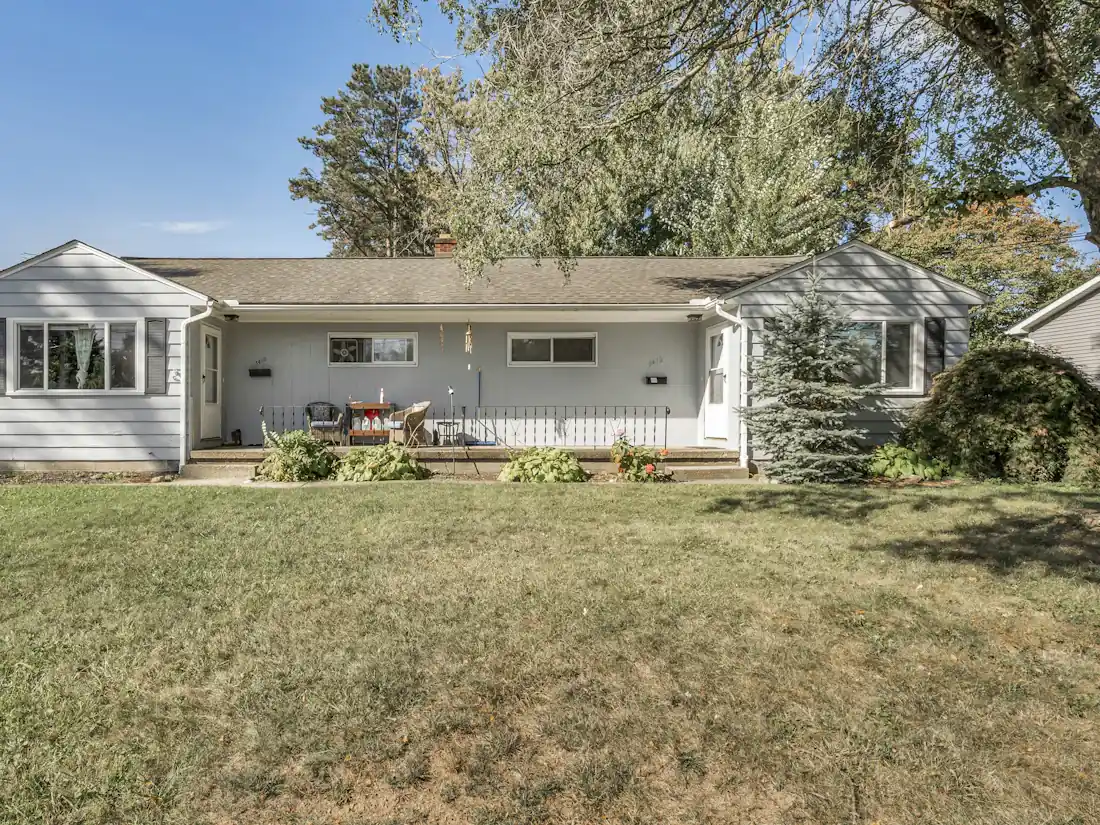
Age and shape. Many homes within a few blocks of the lake are single-story ranches from the 1950s and 1960s, including lakeside streets on the west shore, and their roofs behave differently from both historic downtown houses and newer subdivisions.
Mid-century ranches tend to have long, fairly low-pitched roofs. A lower slope sheds water more slowly, so wind-driven rain and meltwater have more time to work under worn shingles. Many of these homes also have attached carports, covered patios or rear additions with even flatter sections, and those transitions are where leaks usually start.
Then there is what has happened to the roof over sixty or more years. It is common for a ranch of this age to be on its third or fourth roof, sometimes with a second layer laid over the first. Original decking may be plank boards, attic insulation is often thin by today's standards, and ventilation was rarely designed for the heat a modern dark shingle absorbs. Mature trees, which make these streets pleasant, drop leaves into gutters and branches onto roofs. A careful inspection, the kind local roofing pros in Loveland do on older homes, looks at all of that before anyone quotes shingles.
Remodeled homes are part of the picture too. Many lake-area ranches have been updated inside, and some have had roofs replaced in the same project. Others look fresh from the street but still sit under an aging roof. Knowing which one you have is the first step.