Why it matters here
What makes roofing in southeast Loveland different?
Variety. Within the 80537 ZIP code's southeast side you can find attached townhomes built in the 1990s, single-family subdivisions from the 2000s and 2010s, and some older homes from the 1950s through the 1970s.
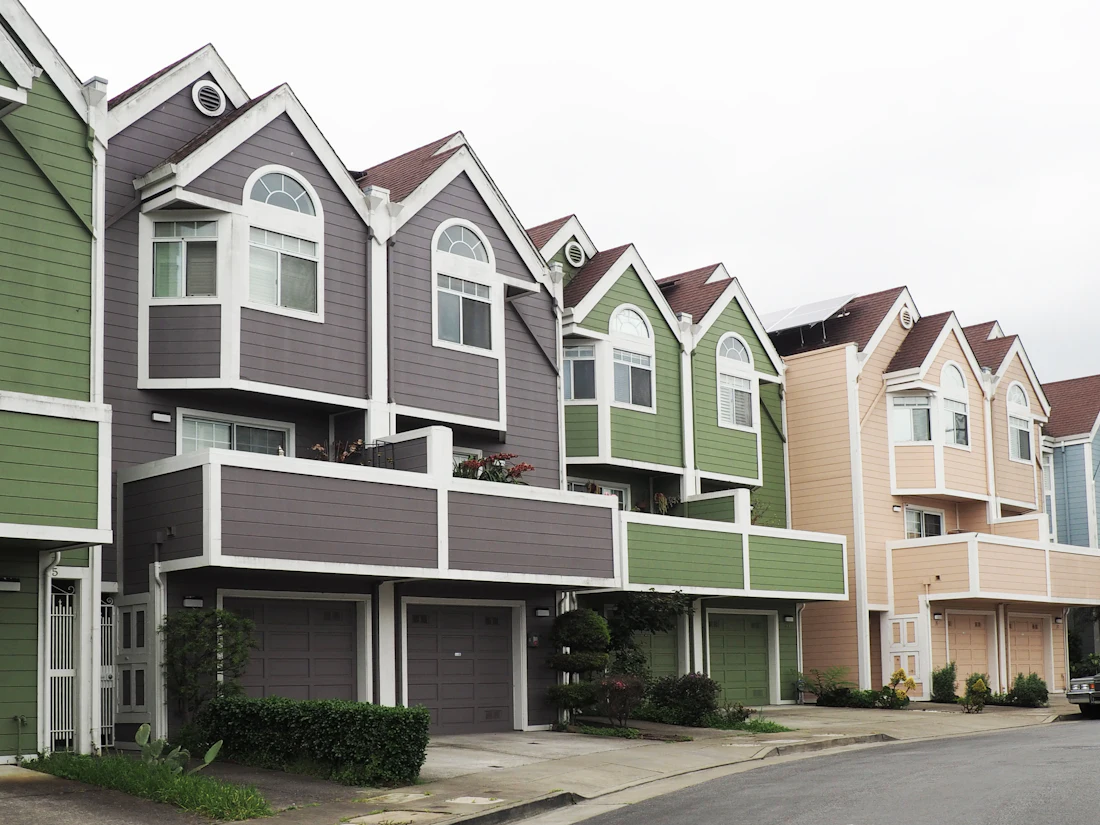
Attached homes are the biggest difference. In a townhome row, one continuous roof covers several households, and the HOA often owns or manages it. A leak in one unit may start over a neighbor's, repairs have to match the whole building, and replacements are usually scheduled building by building. Before calling a roofer, owners need to know whether the roof is theirs or the association's.
The detached homes split by age. Houses from the 2000s and 2010s are often on their first roof, where hail history and builder-grade shingles are the main questions. Older homes on the south and southwest edges look more like the city's mid-century neighborhoods, with layered roofs and older decking. Flat, open ground east of downtown also means fewer windbreaks when storms move in. Whatever kind of home you have, our Loveland roofing guide covers the basics of how local weather wears roofs down.
The practical upshot: two southeast Loveland homes a few blocks apart can need completely different things, so a one-size quote rarely fits.
Insurance works differently for attached homes too. When the association owns the roof, its master policy usually covers storm damage to the roof itself, while your own policy covers the inside of your unit. When owners are responsible for their own roof sections, each owner's policy and deductible apply. Knowing which arrangement you have before a storm makes the claim, and the call to a roofer, much simpler. It is also worth knowing who keeps the records of past roof work on your building, because that history helps any roofer judge what they are looking at.